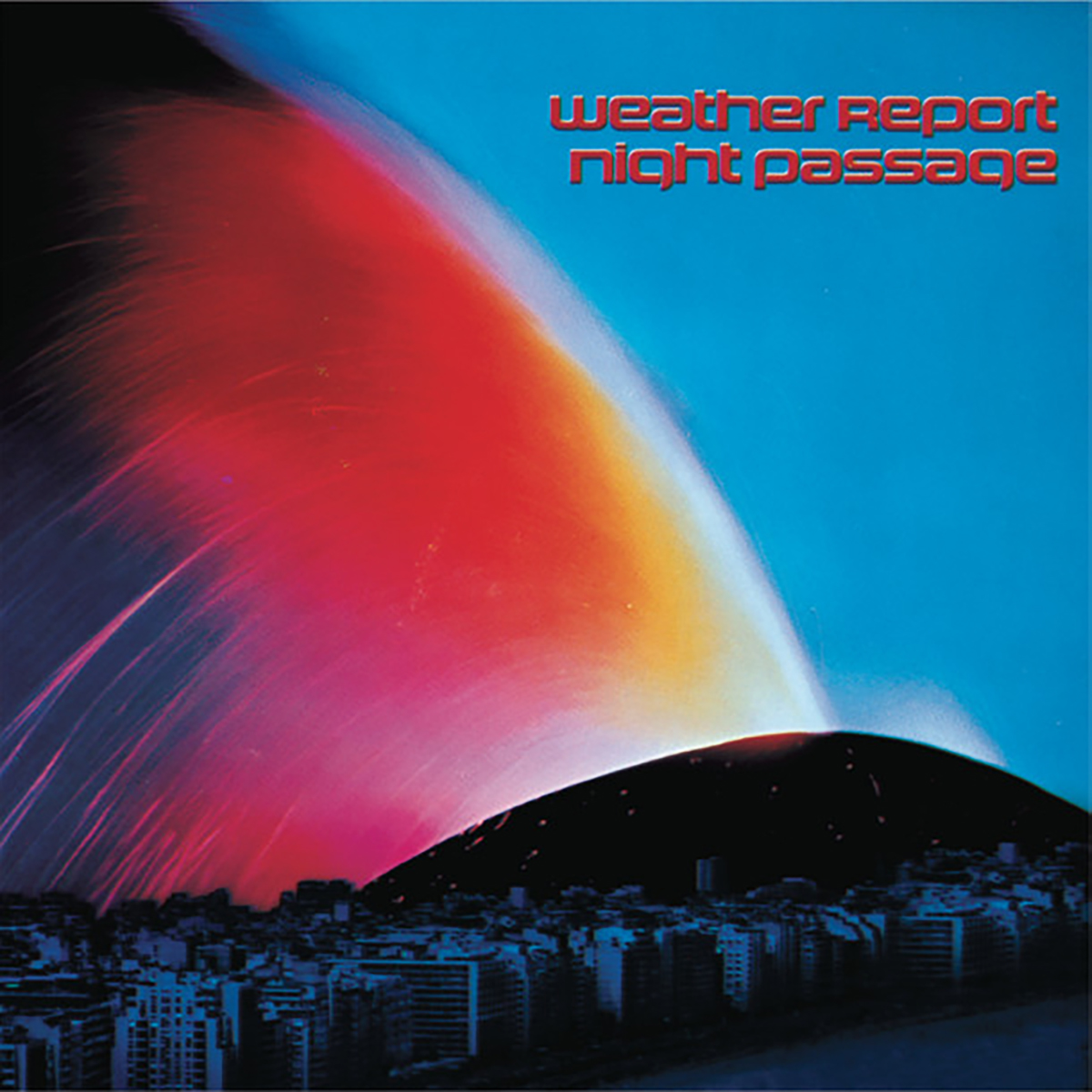

Night Passage features my favorite Weather Report lineup, but the way it was recorded has always fascinated me, too. Much of the album was recorded in front of a studio audience, bringing performance energy into the recording process.
I’ve always felt that some bands are at their best with an audience in front of them. To learn how that setting shaped Night Passage, I reached out to drummer Peter Erskine, who played on the album, and asked him about the sessions.
“Yes, it was totally the band’s intention to record in front of an audience,” he shared.
The Changing Tempo of ‘Night Passage’
The album opens with the title track. I love its swing, even as the tempo changes throughout. When I asked Peter about the recording, he shared an explanation I wasn’t expecting:
“We tracked ‘Night Passage’ at Devonshire Studios, a late-night session that went from okay to worse. The take is cobbled-together from several takes of the tune, hence the tempo changing so much (I was also rushing!) Joe [Zawinul] did not mind and saw or heard it cinematically; the train speeding up to get to where it was going in the dark of night…”

The album’s second-to-last track is Jaco Pastorius’s ‘Three Views of a Secret’, one of my favorite compositions of his. I initially loved this recording, but after hearing the version on his solo album, Word of Mouth, that became the definitive version for me.
The album closes with ‘Madagascar’, recorded live in Osaka, Japan. Peter explained why a concert performance ended up alongside the studio recordings:
“There was not enough material for an album, so a live recording of ‘Madagascar’ was used (a concert in Japan, I think… one of the few instances where FOH sound person Brian Risner was given access to a professional -quality tape deck to capture what the band was doing.)”
Recording at The Complex: An Audience and Unexpected Problems
Peter also recalled the unusual recording setup at The Complex in West Los Angeles, an awkward scramble over audience invitations, and the technical problems that followed:
“The bulk of the album was recorded at The Complex in West Los Angeles — it was pretty new at the time, and this marked one of the first recordings done there as far as I know (a young George Massenburg was the engineer). We played in the large room (where touring groups like EW&F would rehearse their upcoming tour/shows) … the room was not designed to be a recording studio, so audio lines had to be run from the actual studio in the facility to where we were playing. I remember that Jaco and I had been looking forward to inviting all of our L.A. friends to the show, and had indeed already extended verbal invitations, only to be told just before the first night of recording that we had to tell our friends that they were NOT invited, as management had sent out invitations to all sorts of people in the “business” … Jaco and I were really embarrassed and upset by this. And then, of course, most of those invitees didn’t bother to show up, so a call then went out (we found out later) to cartage companies and the like, in essence, begging for ANYBODY to show up so that there’d be some sort of proper-sized audience for us to play to! The irony, and, can you imagine? (I still shake my head remembering all of the phone calls I had to make to tell my friends that they couldn’t come to the show).
“That said, the album pretty fairly reflects the way the band was playing at that time, and it’s a good record. A lot of remarkable playing by Jaco, of course, as well as Bobby Thomas, Jr.
“Post-production and mixing took its usual amount of (too much) time. There were several technical glitches including the tape machine either going out of sync or something that caused its speed to waver a couple of times, also some distortion issues with one of the fancy drum overhead mics that were chosen for the session.
“All of this as my memory is recalling it, I offer the caveat that it was a long time ago.
“The album got mixed barely in time for the band to start a tour of Europe, Zawinul, in particular, was exhausted…”
In his book ‘No Beethoven’, Peter describes how the pressure of finishing the album carried into the tour that followed:
“Speaking of stormy weather — as ‘right’ as everything was about the band and its successes during the years I toured with Weather Report, there was plenty of dysfunction to go around. One lamentable aspect of Joe and Jaco’s perfectionism in the studio was that every album took longer to complete than planned for, with the post-production overdubbing, editing, mixing, and artwork process lasting right up until that album’s release tour was set to take place. So we always seemed to be behind in terms of promoting the album. Worse, the band would begin an arduous tour often in the poorest of health, having come straight out of the confines of the studio with its attendant late hours, drinking, etc.
“By the time we had finished work on Night Passage, Joe was absolutely exhausted, but this did not fit in with his self-image of ‘tough guy,’ hard drinker, and so on. He began this tour occasionally giddy, but more mean and short-tempered, to the point where all of us were walking on eggshells around the man. There was no pleasing him or curbing his nastiness. It speaks volumes about Jaco’s character as well as his relationship with Joe that Jaco had enough balls and sense of what’s right to assemble the band and crew following an early concert during this tour, somewhere in Norway as I recall. And there took place a remarkable scene: The entire Weather Report band and crew were standing in a large circle, with Joe and Jaco in the center, Jaco addressing Joe, pointing out his behavior and demanding that Joe stop it once and for all: “You’re RUDE, Joe. You’ve been acting like a rude motherfucker for a while now, and it’s got to stop.” We all stood wide-eyed and in silence. Finally, Joe said, “You’re right.” More silence. And then he continued, “And I would like to apologize to everyone here, right now.” It was time to put that in the past, and we continued to tour and play some of the best concerts I remember the band giving.”
Night Passage remains a favorite of mine, and Peter’s recollections give me even more to hear in it. The changing tempo that caught my attention has a story behind it, as do the audience, the recording rooms, and the concert performance that closes the album.