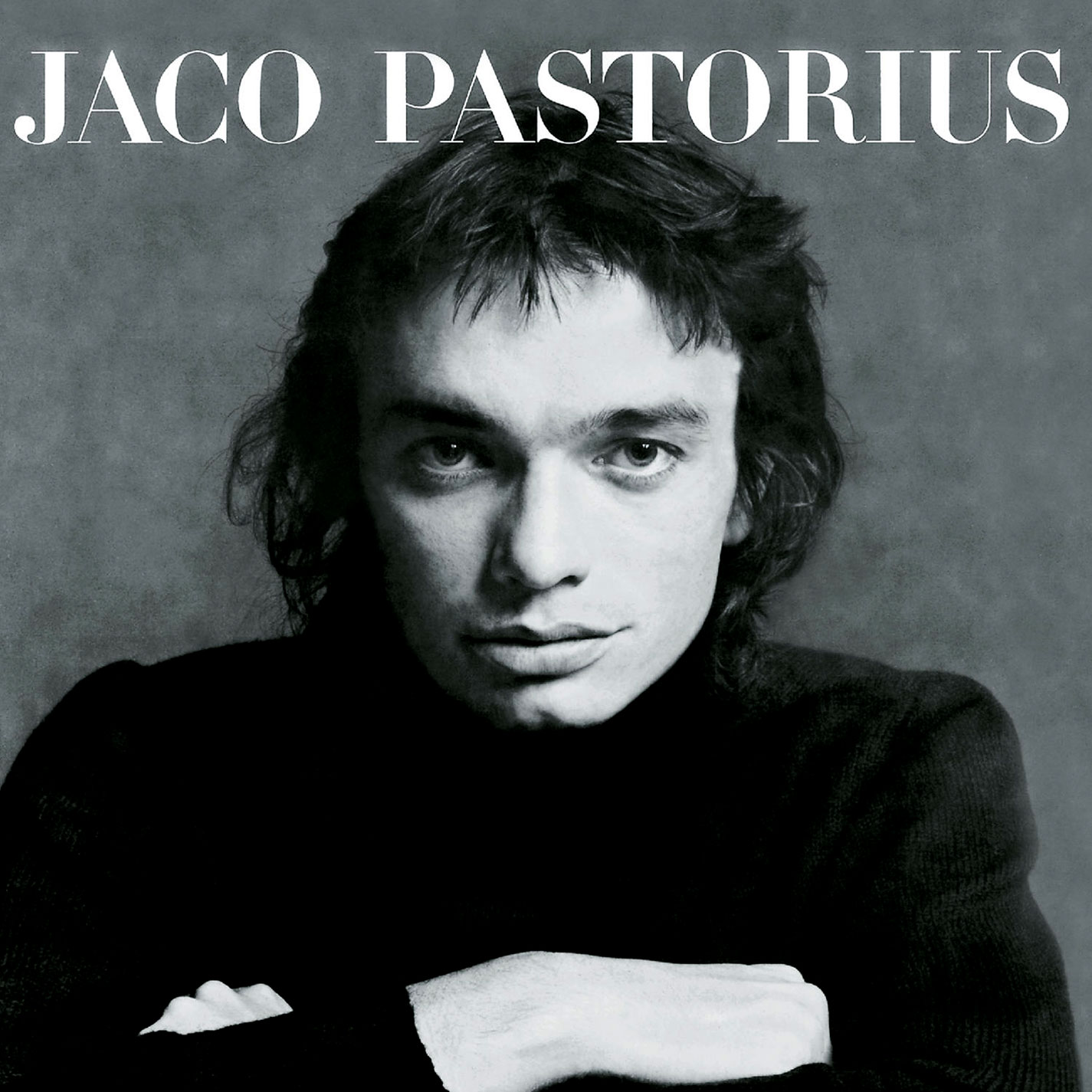

Jaco Pastorius isn’t just my favorite bass player. He’s my favorite musician, composer, and arranger. His self-titled debut brings all those sides of him together.
Over the years, I’ve spoken with younger bassists who say, “I don’t get the hype around Jaco.” This is the album I point them toward.
More Than a Bass Showcase
When Jaco Pastorius came out in 1976, an electric bassist stepping forward as the featured instrumentalist, composer, arranger, and bandleader was still unusual. Stanley Clarke was one of the few already putting electric bass front and center. In an interview about his early solo albums, Clarke described exploring new bass sounds and putting the instrument “way out front” on Journey to Love in 1975.
Jaco took an instrument usually expected to hold down the bottom and revealed an enormous range of possibilities. He played with a horn-like quality, laid down deep grooves, created lyrical melodies, and used chords and harmonics in ways that made you rethink what a bass could do.
“Donna Lee”: The Opening Statement
He was only 24 when the album was released in 1976. The opening track feels like a knockout punch at the start of round one. On “Donna Lee,” Jaco takes a bebop melody onto fretless bass, joined only by Don Alias on congas. There’s nowhere to hide, and he absolutely nails it.
The Groove and the Melody
Showing his versatility and his love of R&B, Jaco brought in Sam & Dave to sing “Come On, Come Over,” the funky tune he wrote with his friend Bob Herzog.
Then there’s “Continuum,” with the lyrical playing that became such an important part of his sound. These tracks show why I hear more than a virtuoso bassist on this record.
“Portrait of Tracy” and the Possibilities of Solo Bass
“Portrait of Tracy,” written for his then-wife Tracy Lee, took me somewhere else entirely. I had never heard bass harmonics before, certainly not like this. When I first heard it, I didn’t know what to make of it. It was so far out there that I was still trying to understand what I was hearing.
So much of what made Jaco distinctive has become part of the language of electric bass. That can make his impact harder to hear when you encounter the players he influenced first.
But I don’t return to this album only because of its influence. I return because the playing, writing, and arranging still knock me out.